
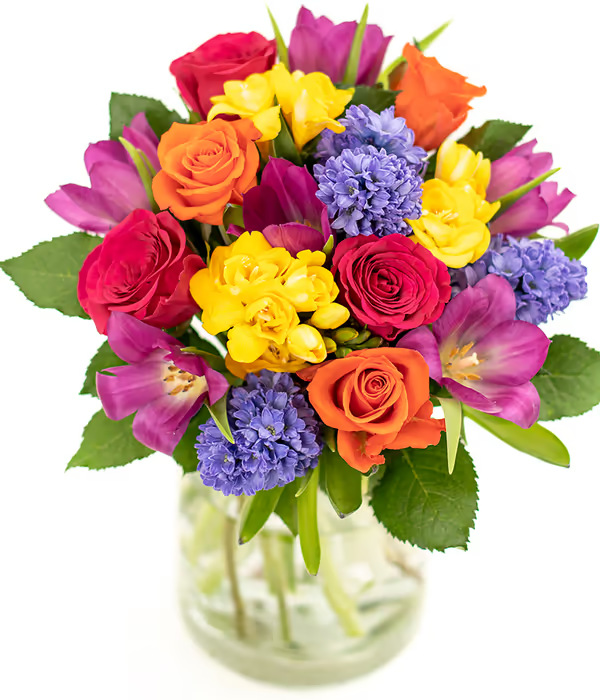
Spring Pop
Hyacinth: The Fragrant Spring Flower We All Love
Hyacinths are beloved for their dense clusters of fragrant, star-shaped flowers that bloom in a variety of stunning colours, including blue, purple, pink, white, and yellow. They symbolise rebirth, constancy, and beauty, making them an indispensable flower of springtime. Originating from the Mediterranean and Middle East, hyacinths have a rich history and are often associated with Greek mythology. Their captivating fragrance and striking appearance make them a popular choice for gardens, floral arrangements, and seasonal decorations.


COMMON NAME
Hyacinth

BOTANICAL NAME
Hyacinthus orientalis

ORIGIN
Mediterranean region and Middle East

PEOPLE ALSO CALL IT
Dutch hyacinth, Garden hyacinth

FLOWERING TIME
Spring (March to April)

ASPECT
Full sun to partial shade

SYMBOLISM
Rebirth, constancy, beauty, sorrow (in some cultures)
Care Tips for a Cut Hyacinths in a Vase
Trim Stems at an Angle: Cut the stems diagonally to enhance water uptake.
Remove Lower Leaves: Strip any leaves that would sit below the waterline to prevent bacteria growth.
Change Water Regularly: Refresh the water every two days and clean the vase to maintain freshness.
Support Stems: Use a tall vase to provide support for the heavy flower spikes.
Keep Cool: Place the arrangement in a cool but light space away from direct sunlight and heat to extend bloom life.

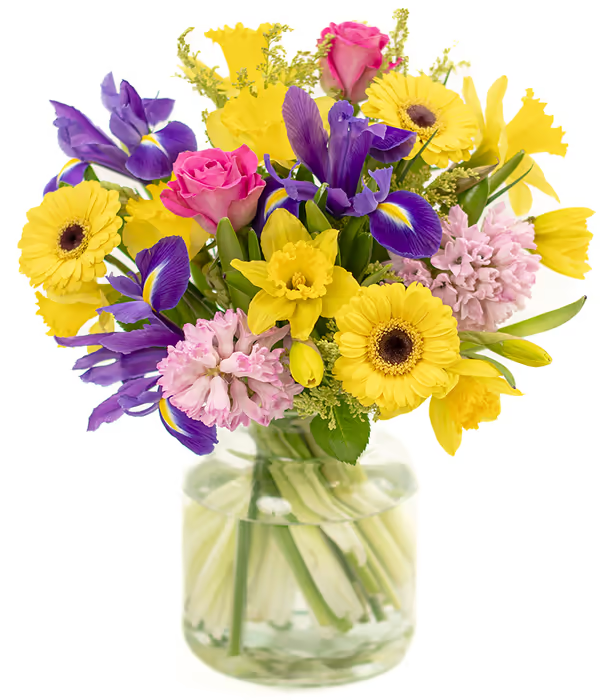
Symbolism & Meaning
Hyacinths carry a wide range of meanings depending on their colour. Blue hyacinths symbolise constancy and sincerity, while purple ones represent sorrow or forgiveness. Pink hyacinths convey playfulness and romance, and white hyacinths signify purity and peace. The flower's connection to Greek mythology adds depth to its symbolism, as it is linked to the story of Hyacinthus, whose tragic tale underscores themes of beauty and remembrance.
Types of Hyacinths
There are several types of hyacinths, with Dutch Hyacinths being the most common. These are characterised by their tightly packed flower spikes and are available in a wide range of vibrant colours. Roman Hyacinths are a more delicate variety with looser, less dense flower clusters, often used in wildflower arrangements. Grape Hyacinths (Muscari) are not true hyacinths but share a similar appearance, with tiny, bell-shaped flowers resembling a cluster of grapes.