
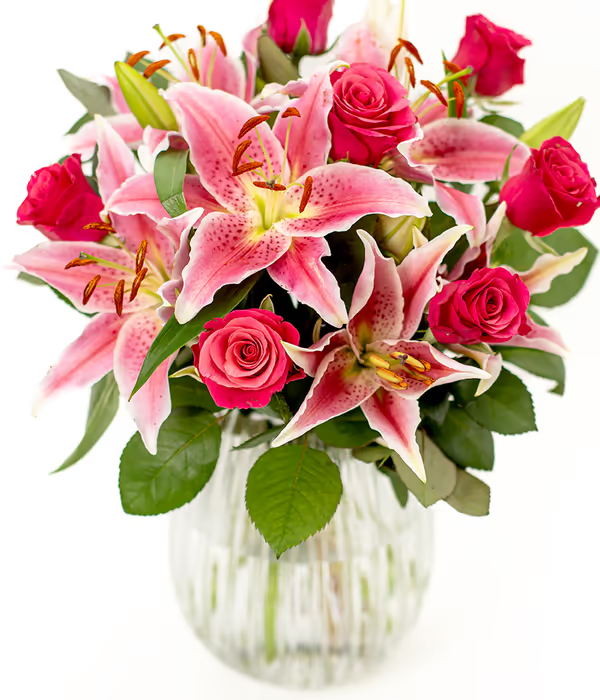
Rose & Lily
Thistle: The Bold Beauty with a Protective Spirit
The thistle is a hardy and unique flower known for its spiky appearance and strong character. Often associated with resilience and pride, it is famously the national symbol of Scotland. Despite its prickly exterior, the thistle produces delicate, globe-like flowers in shades of purple, blue, or silvery green. It symbolises protection, strength, and independence, making it a powerful statement flower in rustic or wildflower arrangements. Thistles are also popular in dried bouquets due to their excellent longevity and striking texture.


COMMON NAME
Thistle

BOTANICAL NAME
Eryngium, Onopordum, Cirsium, Carduus spp.

ORIGIN
Europe, North Africa, Western and Central Asia

PEOPLE ALSO CALL IT
Sea Holly (Eryngium), Scotch Thistle

FLOWERING TIME
Summer to early autumn (June to September)

ASPECT
Full sun, dry or well-drained soil

SYMBOLISM
Strength, resilience, pride, protection, nobility
Care Tips for Cut Thistles in a Vase
Trim stems at an angle: Use a sharp knife or scissors to cut stems diagonally for better water intake.
Minimal leaf removal needed: Thistles have few leaves, but remove any that fall below the waterline.
Use clean, cool water: Change water every 2–3 days and keep the vase clean.
Long-lasting in the vase: Thistles can last 7–14 days and retain their shape well.
Great for drying: Air-dry thistles upside down in a dark, dry place – they keep their colour and structure beautifully.

Symbolism & Meaning
The thistle stands for resilience, courage, and dignity, flourishing even in harsh conditions. Its spiky form represents protection, while the beautiful bloom at its centre symbolises inner beauty and strength. In Scottish culture, it’s a symbol of national pride and defence—legend has it that a Norse invader stepped on one and alerted the Scots! Today, thistles are often used to honour strength in adversity or to symbolise fierce individuality and independence.
Types of Thistles
There are many varieties, each with its own personality:
- Eryngium (Sea Holly) – A popular florist favourite with metallic blue tones and spiny bracts.
- Onopordum acanthium (Scotch Thistle) – The iconic, tall, woolly species symbolic of Scotland.
- Cirsium – Wild thistles commonly found in meadows and natural landscapes.
- Carduus – Another genus of traditional thistles, often used ornamentally or for their symbolic value.