Rose & Lily
Best Flowers to Grow for Cutting in the UK
There’s something especially lovely about filling a vase with flowers you’ve grown yourself. From fragrant sweet peas in early summer to statement dahlias blooming into autumn, a cutting garden can give you a beautiful supply of homegrown flowers for months.
And you don’t need acres of space or years of gardening experience to get started. Many of the best flowers to grow for cutting are surprisingly simple to grow, with plenty that can be raised from seed in a sunny border, raised bed or even a collection of pots.
Whether you’re planning a dedicated cut flower garden for beginners or simply want to add a few flowers for cutting among your existing plants, we’ve rounded up some of the best varieties to grow in the UK.
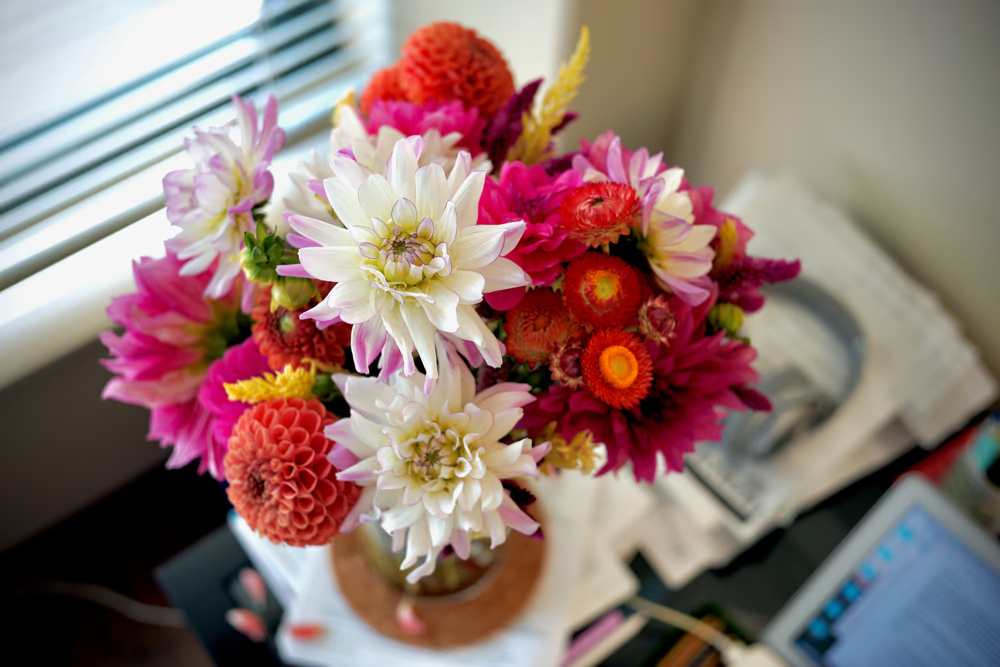
What is a cut flower garden?
A cut flower garden is an area planted specifically with flowers that you can pick and bring indoors.
Unlike a traditional flower border, where you might hesitate before cutting your favourite blooms, a cutting garden is designed to be harvested regularly. In fact, many flowers will reward regular picking with even more blooms.
A dedicated patch isn’t essential, either. If you’re short on space, you can grow flowers for cutting throughout existing borders or choose varieties suitable for pots and containers.
Most popular cut flowers prefer a sunny position, while good soil, regular watering during dry spells and occasional feeding can help plants produce healthy growth and longer stems.
The best flowers for a cutting garden
The perfect cutting garden combines flowers of different heights, shapes, colours and flowering seasons. It’s also worth including a mixture of statement flowers and smaller, more delicate stems that can be used to fill out a vase.
Here are some of our favourite flowers to grow for cutting in UK gardens:
1. Sweet peas
For fragrance alone, sweet peas deserve a place in almost every cutting garden.
Their delicate, ruffled flowers appear in a huge range of colours, from soft pink and white to deep purple and blue, making them perfect for relaxed summer arrangements.
Sweet peas are grown from seed each year and like a sunny position with something to climb. The best part? Regular picking encourages the plants to keep flowering, so the more little posies you make, the more flowers you can enjoy.
Why grow them for cutting?
Beautiful fragrance, delicate flowers and plenty of repeat blooms.
2. Cosmos
If you're looking for easy cut flowers to grow, cosmos are difficult to beat.
Their daisy-like flowers sit on tall, slender stems above feathery foliage and bring an airy, meadow-like feel to bouquets. You’ll find varieties in shades of white, blush, pink and deeper crimson.
Cosmos are annuals, so they can be grown from seed each year. Keep cutting the flowers throughout summer and they can continue producing new blooms well into the season.
Why grow them for cutting?
Easy to grow from seed, prolific and brilliant for adding movement to arrangements.
3. Zinnias
Want lots of colour? Make room for zinnias.
Available in an incredible range of shades and flower shapes, taller zinnia varieties make particularly good cut flowers. They enjoy warm, sheltered positions and can be grown in blocks to provide a generous crop of stems for summer arrangements.
Their strong colours also make them a lovely choice if you prefer cheerful, bold bouquets rather than softer cottage-garden arrangements.
Why grow them for cutting?
Colourful, productive and a great summer cutting flower.
4. Dahlias
Few flowers deliver quite as much drama as dahlias.
From perfect pompoms to huge decorative blooms, there are dahlias to suit almost every bouquet style. They flower during summer and autumn, bringing colour to the cutting garden when some earlier flowers have started to fade.
Regular picking and deadheading will help keep your plants looking productive throughout their flowering season.
Best Dahlias for Cut Flowers
If you're choosing the best dahlias for cut flowers, look for varieties with strong stems and flower shapes that work well in a vase.
Some beautiful options include:
- Dahlia 'Café au Lait' – Famous for its large decorative blooms in soft, creamy tones. The RHS lists this variety as suitable for cut flowers.
- Dahlia 'Cornel' – A rich-coloured ball dahlia with neat, rounded flowers that's also recommended for cutting.
- Dahlia 'Bishop of York' – A striking dahlia with bright flowers that can add a splash of sunshine to summer arrangements. The RHS has featured it among dahlias well suited to cutting.
Try growing a few different shapes and colours together for a cutting patch that gives you plenty of choice when arranging your flowers.
5. Roses
It's hardly surprising that roses are among the best flowers for cutting. Beautiful blooms, elegant stems and – depending on the variety – gorgeous fragrance make garden roses a natural choice for vases.
Best Roses for Cutting
When choosing the best roses for cutting, hybrid tea roses are a particularly good place to start. They typically produce large flowers on long, upright individual stems, which makes them especially well suited to flower arranging.
Look for healthy repeat-flowering varieties with sturdy stems. RHS-listed options suitable for cutting include hybrid tea roses such as 'Special Occasion' and 'Tiamo'.
Choose a sunny spot and give your rose enough room to establish. You'll then have beautiful blooms that can be appreciated both outside and in.
6. Sunflowers
Nothing says summer quite like a sunflower.
They’re among the easiest cut flowers to grow, particularly for beginners, and there are far more varieties available than the enormous yellow sunflowers you might remember growing as a child.
For flower arranging, look for branching or smaller-flowered varieties that produce stems at a more manageable scale.
Why grow them for cutting?
Easy, cheerful and perfect for making a bouquet feel instantly summery.
7. Cornflowers
For something a little more delicate, try cornflowers.
Their distinctive flowers add beautiful blue tones to a cutting garden, although pink, white and darker varieties are available too.
They work particularly well in informal cottage-garden arrangements alongside cosmos, sweet peas and other airy flowers.
Why grow them for cutting?
Simple to grow from seed and ideal for relaxed, wildflower-inspired bouquets.
8. Snapdragons
With tall stems covered in colourful flowers, snapdragons – or antirrhinums – are brilliant for giving arrangements height.
Plant several colours together and you'll have upright flower spikes that provide a lovely contrast to rounded roses and dahlias.
Why grow them for cutting?
Long stems and an unusual shape that adds instant structure to a vase.
9. Scabious
Scabious produces delicate pincushion-shaped flowers on slender stems.
They're beautiful woven between larger statement blooms and their seedheads can be attractive too, making them a versatile addition to a cutting patch.
Why grow them for cutting?
An excellent supporting flower that adds texture without overwhelming an arrangement.
10. Larkspur
Tall and elegant, larkspur produces flower-filled stems in shades including blue, purple, pink and white.
It's another useful flower for creating height in arrangements and pairs beautifully with cottage-garden favourites such as roses and sweet peas.
Best cut flowers to grow from seed
Growing from seed is one of the most affordable ways to start a cutting garden, and there are plenty of beginner-friendly options.
Some of the best cut flowers to grow from seed include:
- Cosmos
- Sweet peas
- Zinnias
- Sunflowers
- Cornflowers
- Scabious
- Larkspur
- Calendula
Annual flowers are particularly useful for beginners because many grow, flower and can be picked within the same year. The RHS recommends annuals including sunflowers, cosmos, cornflowers and larkspur for cutting, with seeds generally costing less initially than established perennial plants.
Try several varieties rather than filling your whole garden with one flower. A combination of focal flowers, tall stems and smaller filler flowers will give you far more possibilities when it's time to make a bouquet.
How to start a cut flower garden for beginners
Creating your first cutting garden doesn't need to be complicated.
Find a sunny spot
Most popular cutting flowers prefer plenty of sunshine, so start with the brightest part of your garden if possible. A sheltered location can also help protect taller stems from strong winds.
You can grow your flowers directly in the ground, in raised beds or in containers if space is limited.
Choose easy flowers first
For your first year, concentrate on a handful of reliable varieties rather than trying to grow everything at once.
Cosmos, sweet peas, sunflowers, cornflowers and zinnias are all good candidates if you're searching for the easiest cut flowers to grow.
Grow a mixture of shapes
Think like a flower arranger when choosing seeds and plants.
Try combining:
- Large focal flowers such as dahlias, roses or sunflowers
- Tall flowers such as snapdragons or larkspur
- Airy flowers such as cosmos or scabious
- Fragrant flowers such as sweet peas
- Foliage and greenery to fill out your arrangements
That way, when you head into the garden with your secateurs, you'll already have the ingredients for a beautifully balanced bouquet.
Keep picking
Don't be too precious about cutting your flowers – it's what your cutting garden is there for.
With flowers such as sweet peas, regular picking or deadheading can actually help to keep plants flowering for longer.
How to cut flowers from your garden
For the freshest possible flowers, try cutting them during the cooler part of the day. Eflorist's own flower-care guidance recommends picking garden flowers in the morning.
Use clean, sharp secateurs and take a good length of stem without removing so much growth that you weaken the plant.
Once indoors, place your stems into a clean vase with fresh water. Remove foliage that would otherwise sit beneath the waterline and, for most flowers, recut the bottom of the stem before arranging them.
Keep your finished bouquet away from strong direct sunlight, radiators and bowls of ripening fruit to help the flowers stay looking their best.
Which cut flowers last the longest?
Vase life varies considerably according to the flower, variety, how mature it was when picked and how it's cared for afterwards.
If long-lasting cut flowers are your priority, zinnias, chrysanthemums, alstroemeria and many varieties of roses can all be good choices.
Whatever you're growing, clean water and a clean vase make a big difference. Change the water regularly, remove fading flowers and keep any leaves out of the water, where they can encourage bacteria to develop.
No cutting garden? Let us bring the flowers to you
Growing flowers is wonderfully rewarding – but sometimes you'd rather enjoy the bouquet without the sowing, watering, staking and waiting.
If that's you, Eflorist makes it easy to have fresh cut flowers delivered straight to your door, or to send a beautiful bouquet to someone special.
Our cut flower delivery options make it easy to enjoy beautiful seasonal blooms whatever the size of your garden – and there's no need to find the secateurs.
With next-day flower delivery available across the UK and a 7-day freshness guarantee, you can enjoy beautiful flowers even when your own cutting patch isn't quite ready to bloom.